Secondary Legislation Scrutiny Committee examines this month's Statement of Changes in Immigration Rules (HC 1691)




In a report published yesterday, the House of Lords Secondary Legislation Scrutiny Committee has drawn recent changes to the Immigration Rules to the special attention of the House, citing concerns about insufficient explanatory material and a lack of clarity over policy objectives and implementation. It notably expressed concerns that the Home Office "has not fully thought through the implications of the changes."
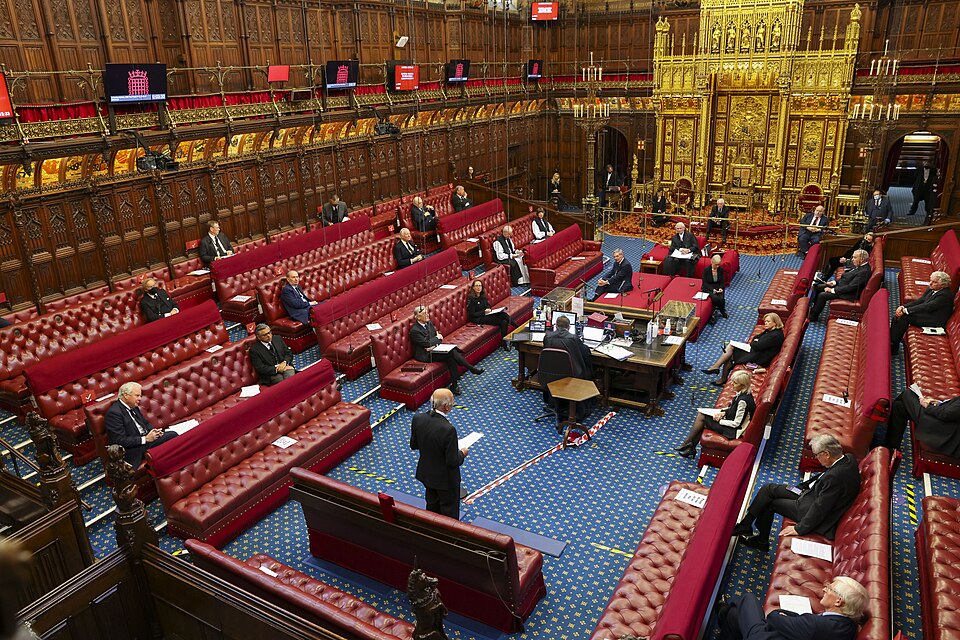 Image credit: WikipediaYou can download the report here or read it online here.
The Committee examined the Statement of Changes in Immigration Rules (HC 1691) and the Immigration (Passenger Transit Visa) (Amendment) Order 2026. As the report notes, the instruments introduce a series of measures as part of a wider package of asylum and immigration reforms, including changes to the asylum support system, reductions in the duration of refugee status, restrictions on visa routes, and new visa requirements for certain nationalities
The Committee noted that the Home Office failed to provide Impact Assessments (IAs) for all of these fundamental changes. While the department promised to provide assessments when wider reforms are fully introduced, the Committee stated: "the lack of an assessment of the effects of, in particular, the reduction in the duration of refugees' permission to stay and the changes to the occupations in which they may be permitted to work makes full scrutiny of these changes impossible."
The report highlights a disconnect between ministerial promises and departmental output. The Committee recalled that in October 2025, the Minister for Migration and Citizenship, Mike Tapp, assured Parliament that the Home Office took the provision of explanatory material and IAs "extremely seriously." The Committee concluded: "It is not evident that that commitment has been met in this instance."
Among the major measures introduced by the Statement of Changes is the reduction in the duration of leave granted to refugees from five years to 30 months under the new 'core protection' model, with a requirement for repeated reassessment of conditions in their home countries. Expert submissions to the Secondary Legislation Scrutiny Committee from organisations such as the Refugee Council and the Immigration Law Practitioners' Association (ILPA) raised alarms over the administrative burden of the new 30-month review cycle. Estimates suggest the Home Office may need to conduct between 1.1 million and 1.9 million status reviews over the next decade. The Home Office disputed these figures, suggesting that artificial intelligence and "efficient" systems would manage the workload. However, the Committee remained sceptical of the department's refusal to provide cost or resourcing estimates, noting: "The Home Office should have provided estimates of the additional workload and how it would be resourced alongside this Statement."
Concerns were also raised by the Committee regarding the "piecemeal" nature of the rollout of the changes. The new Protection Work and Study route, intended to incentivise employment for refugees, has not yet been fully detailed. The Committee agreed with stakeholder submissions that this creates a barrier to scrutiny and leaves refugees in a state of "limbo" that could negatively impact their mental health and integration. On the Home Office's failure to address specific questions regarding social integration and housing, the Committee remarked: "The Home Office's lack of responses on these issues leads us to question whether it has fully thought through the implications of the policy." The lack of an IA on the wider asylum system changes also led the Committee to believe that "the Home Office may not have fully thought through the implications of the policy."
While unaccompanied child refugees currently retain the five-year leave, the Committee highlighted future uncertainty. The Government is developing a new model for this cohort that may also apply to those who applied after 2 March. The Committee found the explanations on this point unclear and encouraged the House to probe the Government further.
The report further questions the Government's use of international comparisons. While the Government pointed to falling asylum claims in Denmark as a justification for moving toward temporary status, the Committee noted that some evidence suggests such changes actually reduce refugee employment levels. The Committee stated that "either the Government has not sought such evidence... or it has sought such evidence and is not divulging the results," which it described as "contrary to good practice".
Technical concerns were raised regarding the timeline of the changes. Although the new core protection rules officially came into force yesterday, they apply retrospectively to anyone who claimed asylum on or after 2 March 2026. The Committee argued this breaches the spirit of the "21-day rule," which dictates that legislation should be laid before Parliament for three weeks before taking effect. The Committee found the Home Office's justification - that this prevents a "rush" of arrivals - unconvincing, stating it is "unlikely... that a change in the duration of leave... is a key driver of when someone might seek to make a small boat journey."
On new visa requirements for visitors from Nicaragua and St Lucia, introduced with immediate effect to address concerns about asylum claims, the Committee stated that "the language used in the [Explanatory Memorandum] overstates the likely implications of observing the 21-day rule in this case," given the very small proportion of asylum claims involved.
Other measures examined by the Committee include the "visa brake" on student and some work visa applications from nationals of Afghanistan, Cameroon, Myanmar and Sudan, intended to reduce asylum claims linked to visa routes. An impact assessment for this measure estimated a net economic loss, with reduced tuition fee income identified as a significant factor. The Committee noted that this comes "at a time of increasing strains on the finances of higher education providers."
The report also addressed increased English language requirements for settlement, changes to rules on dependent children joining relatives, and a 24-month extension to the Ukraine Permission Extension Scheme. Across these areas, the Committee repeatedly highlighted gaps in information and analysis.
In its overall conclusions on the various changes, the report states:
68.This Statement contains a wide range of changes to the Immigration Rules. Those which received the most comments in the submissions stem from the Government's aims to reduce burdens on the asylum system and to begin implementing the new asylum system, as set out in the November policy paper Restoring Order and Control. We asked the Home Office a number of questions on important aspects of the implementation of these measures, and in many cases we found the answers unhelpful. For example, the Home Office did not fully address issues such as: the implications of the shorter duration of permission for asylum seekers' housing, employment and mental health; whether tightening settlement rules in Denmark has reduced refugees' employment levels; the cost and resourcing implications of the additional 30-month reviews; and its questionable assertion that the introduction of the 30-month reviews will only begin to have an impact once the first of those reviews takes place. We are therefore concerned that the Home Office has not fully thought through the implications of the policy.
69.It is also unhelpful that IAs have only been produced for two of the measures discussed above, one of which is the relatively routine extension to the Ukraine Permission Extension Scheme. While an IA (or IAs) has been promised when wider reforms to the asylum system are introduced, the lack of an assessment of the effects of, in particular, the reduction in the duration of refugees' permission to stay and the changes to the occupations in which they may be permitted to work makes full scrutiny of these changes impossible. The Home Office has said that it is assessing the impact of the package of changes 'iteratively', and we encourage it to consider whether further information can be made available during this iterative phase.
70.As we have said before, we understand the political imperative to take action in the area of immigration, but appropriate processes should still be followed and full information provided. In oral evidence to us in October 2025, the Minister for Migration and Citizenship at the Home Office, Mike Tapp MP, assured us that the department takes the provision of explanatory material and IAs "extremely seriously". It is not evident that that commitment has been met in this instance.