Committee says much remain unclear, expresses doubts about how effective changes will prove in practice




A report published last week by the House of Lords Secondary Legislation Scrutiny Committee has highlighted concerns about recent statutory instruments making changes to the asylum support system.
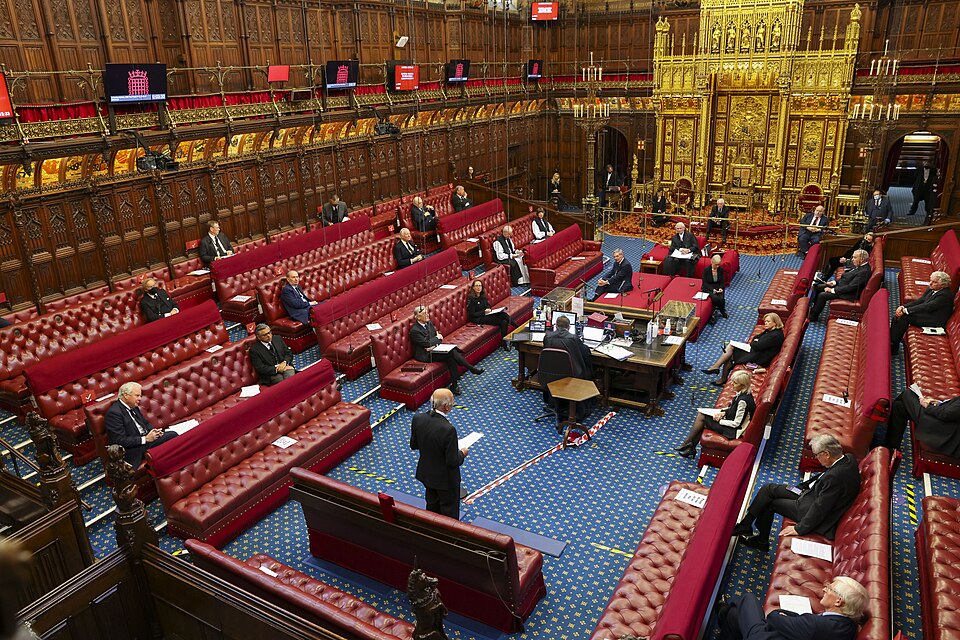 Image credit: WikipediaYou can download the 44-page report here.
The Committee examined the Draft Asylum Seekers (Reception Conditions) (Amendment) Regulations 2026, the Draft Immigration and Asylum (Provision of Accommodation to Failed Asylum Seekers) (Amendment) Regulations 2026, and the Asylum Support (Amendment) Regulations 2026 (SI 2026/209), all laid before Parliament on 5 March 2026. The Asylum Support (Amendment) Regulations 2026 come into force later this week.
As the report notes, the instruments aim to reduce the incentives for asylum seekers to abuse the asylum support system.
One of the most significant planned changes is the removal of a duty on the Government to provide support to asylum seekers who would otherwise be destitute under the draft Asylum Seekers (Reception Conditions) (Amendment) Regulations 2026. The report explains that this duty is being revoked ahead of a wider reform of the asylum system. The Government has stated that it will provide it with "more flexibility to shape how asylum support is delivered, while still keeping important protections in place," and will reduce opportunities for "misuse and abuse of the system." Support will, however, remain available to those "in genuine need". The Home Office indicated that new framework is "in development as part of wider reforms of the asylum system."
The Committee drew particular attention to the lack of detail about how the new system will operate, stating: "The lack of clarity about how the new policy will operate, including how 'genuine need' will be assessed, makes it impossible to scrutinise this measure adequately. Given that the powers in secondary legislation are time-limited, we understand why the change is being made now, but it is unsatisfactory that details on its practical implication will follow at a later date."
While the Government has said that current arrangements will continue in the interim, the report notes that future policy may allow support to be withdrawn in a range of situations, including where an asylum seeker has the right to work, has "deliberately made themselves destitute," or could be supported by others. The Committee highlights the potential consequences of such changes, observing that "withdrawing support from a person who is destitute, for whatever reason, could lead to increased homelessness, crime and illegal working," and noting that the Home Office has not set out how these risks would be managed.
The report points to a potential contradiction within the policy. While support may be withdrawn to create a deterrent effect, the Home Office has said that assistance would still be provided where required to meet legal obligations. The Committee comments that this "runs counter to the overall aims of the policy in the short term and could undermine any potential disincentive effects."
Concerns were also raised by the Committee over the lack of a timescale for development of the new policy framework. It said: "It is regrettable that clearer timelines on the wider policy development in this area are not available, but it appears to be still at an early stage. We welcome that the current approach will be maintained until the new approach is finalised, in order to provide clarity for those affected. We trust that the policy development will include consultations as appropriate, including with organisations representing and working with asylum seekers, and that the impact analysis will be comprehensive. When the final policy is brought forward, the explanatory material should cover how the risks arising from the policy will be managed, including any cost and resource implications."
A second key change would allow support to be removed more quickly from asylum seekers suspected of working illegally. At present, such cases must be investigated under fraud or concealment rules, a process the Government says can take several weeks. Under the new approach, support could be withdrawn where there are "reasonable grounds to suspect" illegal working.
However, the Committee questions the likely impact of this change, citing data showing that relatively few cases are currently identified. It states: "Given these relatively small numbers of cases investigated for fraud (0.3% of all those receiving support) and those where support was discontinued, reduced or withdrawn (0.05% of those receiving support), we are not convinced that the measure will have significant consequences."
The report also highlights risks similar to those identified in relation to the first policy. It notes that if a person loses both their income from illegal work and their state support at the same time, this "could also lead to increased homelessness, crime and further illegal working." While the Home Office has said that individuals could reapply for support if they become destitute, the Committee observes that "it appears that in at least some cases, support could be withdrawn only to be reinstated," raising questions about whether this would undermine the intended deterrent effect.
More broadly, the Committee emphasises that the proposals form part of wider reforms that remain at an early stage. It notes that no consultation has yet taken place and that no impact assessment has been produced, with the Government stating that it is "not possible to assess impacts in advance" of the new framework.
In its conclusion, the Committee reiterates that the measures are intended to discourage abuse of the asylum support system, which it supports, but expresses uncertainty about their effectiveness. It states: "Significant elements of the policies remain unclear, not least because they are part of wider reforms to the asylum system which appear to be still at an early stage of development. We thus have doubts about how effective the changes will prove to be in practice."