Report by Border Forensics and University of Bristol research centre warns continuation of policies will precipitate more deaths




A comprehensive new report by researchers at the ESRC Centre for Sociodigital Futures at the University of Bristol and Border Forensics concludes that policies designed to stop small boats crossing the Channel have directly contributed to a sharp rise in deaths.
 You can read the report, How 'stopping the boats' kills: A digital counter-forensic investigation of the human cost of the UK's externalised border in the Channel, online here.
The year-long collaborative investigation draws on data from migrant solidarity activists in northern France, French coastguard records, and UK Home Office transparency data to examine trends in fatalities and the effects of border enforcement measures.
According to the report, a "dramatic surge in fatal incidents" began in summer 2023, despite a decline in the number of dinghies and people arriving in the UK. Figures in the report show a sharp rise in fatalities, with 112 people confirmed dead or missing from Channel crossing attempts between the end of 2023 and the end of 2025. In 2024 alone, 76 deaths were recorded, more than the combined total for all previous years since 2019, despite fewer people making the journey than in earlier peak years.
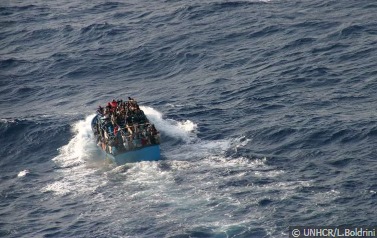
The researchers state that this increase in deaths occurred "despite an increase in aerial surveillance and maritime search-and-rescue capacity," and that fatalities increasingly took place closer to the French coast. The investigation attributes this shift to "new deadly mechanisms," including "extreme overcrowding, resulting in people being crushed inside of dinghies, and chaotic launches, often in the midst of violent police interventions to prevent departures."
The report examines three border policing practices in detail, which it says are behind the new mechanisms. First, it identifies "upstream anti-smuggling measures and supply-chain disruption," arguing that international cooperation has reduced the availability of dinghies and materials, leading to the use of "larger and lower quality inflatables which are increasingly overcrowded." It also states that such measures have "reduced the opportunities for under-resourced groups to organise their own journeys," thereby "strengthening the hold of professionalised smugglers on the market."
Second, the report analyses "expanded aerial surveillance," which it says is "framed primarily in terms of supporting search and rescue operations" but in practice is "focused on coordinating police patrols on the ground, and gathering data and intelligence for prosecutions." The researchers conclude that, "by enabling faster detection and police intervention, surveillance has contributed to overcrowding and the advent of new dangerous tactics for small boat departures."
Third, the report highlights "increased police activity on the French coast," funded by the UK, which it says has "altered the geography of small boat departures" and led to the adoption of "taxi boats," requiring people to board dinghies already afloat. It further states that "police's violent tactics, especially the use of riot control weapons such as tear-gas, stun grenades, and rubber bullets, have also directly endangered travellers and led to panics, crushes, and people drowning in shallow waters."
As the report highlights, since the 2018 Sandhurst Treaty, the UK has provided "over £625m for more police, equipment, and surveillance technology along the French coast." According to the report, this funding has been used "to push the bounds of what the French are willing to do to stop small boat crossings." It further identifies a peak in deaths in 2023-24 following a £476m UK-France Joint Leaders Declaration, noting that "deaths do not clearly correlate with numbers of arrivals," but that "there is a positive association between deaths and overcrowding which has increased year on year."
According to the authors, authorities "knew, or ought to have known, the deadly consequences of their policies." The report cites government documents and statements, including the Home Office's 2023–24 corporate risk register, which identified a "critical risk of 'serious harm, injury or death… as a result of people attempting to arrive in the UK by dangerous methods'." It also references remarks attributed to ministers acknowledging that increased pressure on smuggling networks had led to overcrowded boats and "more anarchy on the beaches in France."
In its concluding section, the report warns that policy-makers have continued to pursue prevention strategies that "increase the level of danger," as the UK and France negotiate new funding from 2026 with a focus on enforcement and "upstream" measures. It cites claims that UK funding was used to press for allowing interceptions at sea, agreed by France in January 2026, and warns that facilitators are "incredibly adaptable." It also highlights continued emphasis on policing over safety equipment and notes new international supply-chain crackdowns and new offences under the Border Security, Asylum and Immigration Act 2025, which it says "does nothing to address the root causes of overcrowding or violent confrontations."
The report concludes: "There is every reason to think the continuation and further development of stop the boats policies will have the same results as in years past, precipitating more deaths in the Channel. However, given the evidence that increased supply chain disruptions, law enforcement surveillance, and violent police interventions to prevent departures have driven the rate of fatalities rather than 'save lives', it will not be possible for officials to say that increased migrant deaths were not a foreseeable consequence. It is still not known how far they are willing to go with further enforcement action which they claim will end illegalised small boat crossings, whatever the human costs."