Peers criticise lack of plan behind asylum reforms introduced by March's HC 1691




A notable recent House of Lords debate on the latest changes to the Immigration Rules saw sustained criticism from peers across parties, alongside a defence of the measures by the Government, with Lord of Hanson of Flint arguing they form part of a broader strategy to reform the asylum system and reduce backlogs.
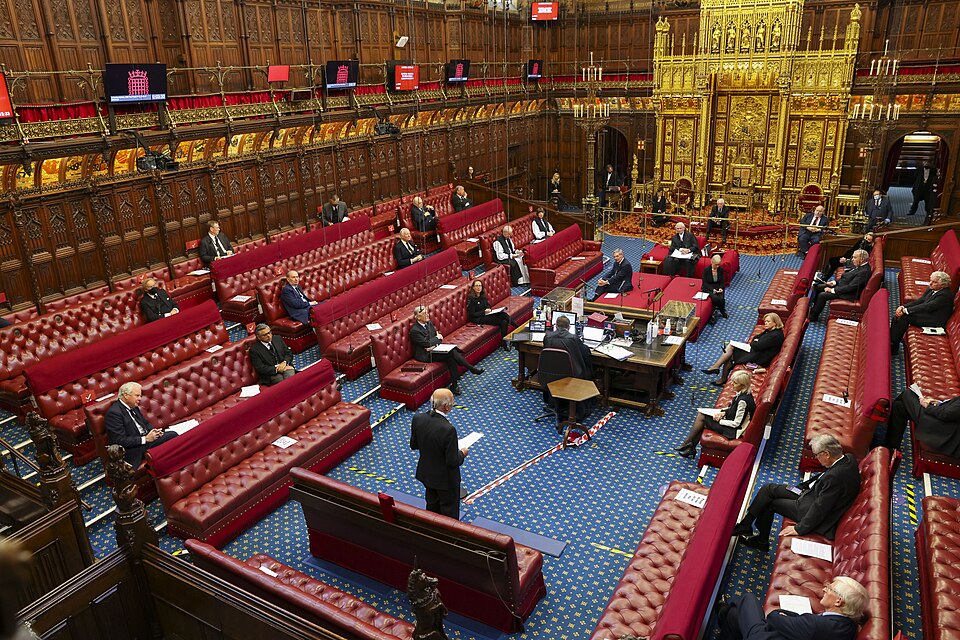 Image credit: WikipediaOpening the debate held in the Lords on Tuesday, Liberal Democrat Lord German moved a motion to regret opposing the Statement of Changes laid on 5 March. Among many other changes, the Statement reduces the duration of refugee and humanitarian protection from five years to 30 months and introduces restrictions on student visa routes for nationals of Afghanistan, Cameroon, Myanmar and Sudan to prevent asylum claims. Lord German argued that the measures lacked a coherent plan to reduce the asylum backlog or end the use of asylum hotels, while risking increased bureaucracy, higher costs, and negative impacts on refugee integration.
He cited a critical report from the Secondary Legislation Scrutiny Committee, describing it as "one of the most excoriating reports from our Select Committee that I have ever seen." Lord German continued: "Its 15 pages can be summed up in a few words: piecemeal, ill thought-out and lacking in evidence. Add to that the financial assertions made by the Government that have now been blown out of the water and we have a policy for which we will surely pay a sad and unnerving price in both financial and human capital terms."
Lord German warned that reducing the standard period of refugee protection from five years to 30 months would create instability for individuals and families, potentially undermining integration and increasing administrative burdens. He argued that repeated reviews of refugee status could place additional strain on the Home Office and lead to significant costs, referencing external estimates suggesting millions of cases could require reassessment over time. He also raised concerns about the absence of expanded safe routes for refugees and the potential for increased destitution if support provisions are tightened.
The Liberal Democrat peer further questioned whether the proposals were consistent with the UK's obligations under the 1951 Refugee Convention, saying: "With these changes, the United Kingdom is undermining its international obligations and turning its back on people in need who could make a positive contribution."
Supporting concerns about the process, Labour's Lord Dubs criticised the use of secondary legislation for reforms of this scale. He noted that the House of Commons had not debated the changes and argued that the proposals would have been more appropriately introduced through primary legislation, allowing for detailed scrutiny and amendment.
Lord Dubs told the House: "Frankly, I could not believe it, but I have discussed it with various MPs, who said there is no possibility for the elected House to debate this issue. These are not trivial changes; they are quite fundamental to the way in which we deal with asylum seekers and refugees, and they are too complicated as changes for the procedure that is open even to us in this House. … My sense of what we have before us is that we are dealing with a lot of piecemeal changes—not a total, whole approach to a difficult issue. I have the impression that the issues have not been all that well considered."
Lord Dubs echoed concerns about the operational impact of the reforms, particularly the regular refugee status reviews and the resulting pressure on Home Office capacity and legal aid provision. He also highlighted potential consequences for refugee children and family reunion, asking when previously paused applications would resume. While welcoming the extension of support schemes for Ukrainians, he characterised the overall approach as lacking a comprehensive strategy.
Baroness Teather, a former director of the Jesuit Refugee Service, noted: "My experience of working alongside asylum seekers and refugees suggests that offering only temporary protection, coupled with the requirement to endure regular cycles of jeopardy to apply for renewal, will leave refugees in a near-permanent state of precarity and vulnerability. It is very likely to undermine refugees' ability to settle, to integrate, to get work, to keep work [and] to engage in education and to lay down roots."
Speaking from the perspective of his role as chancellor of the University of Cambridge, Lord Smith of Finsbury focused on the impact of the changes on international students. He said it "pains" him to argue that Ministers had "got these changes wrong", particularly the decision to restrict student routes from Afghanistan, Cameroon, Myanmar and Sudan. He warned that the measures would remove opportunities from students affected by conflict and repression, including Afghan women, and argued that they would also reduce the benefits to UK universities.
Baroness Hamwee highlighted the impacts of the changes for the immigration and asylum legal advice sector. She noted that the increasing complexity of the rules, combined with case law and tribunal decisions, risks making the system "near impenetrable", which in turn can deter lawyers from entering or remaining in this area of practice. She warned that this, alongside legal aid rates, would make it harder for applicants to access quality advice and representation. She expressed concern that reduced availability of experienced practitioners could affect the quality of initial advice, particularly given pressures on Home Office decision-making.
Responding for the Government, Lord Hanson of Flint defended the changes as part of a wider programme to address challenges inherited in 2024, including a large asylum backlog and extensive use of hotel accommodation. He stated that additional staffing and system reforms had already contributed to a reduction in outstanding asylum decisions and a decrease in the number of hotels in use.
Lord Hanson rejected claims that there was no plan, pointing to an immigration White Paper and a series of related measures aimed at improving processing times, reducing abuse, and strengthening control over migration.
He told the Lords: "I challenge the claim in the Motion of regret from the noble Lord, Lord German, that there is no plan. There is a plan to speed up asylum claims, provide targeted support and ensure that we meet our international obligations, ensure that we reduce hotel use and ensure that we do that in a fair and appropriate way. The Home Secretary has set out—yes—the most sweeping reforms to tackle illegal migration in a generation. Yes, the Immigration Rules changes mark a major step towards a fundamental reset of the system. Yes, there is a new core protection offer for refugees. Yes, there are changes planned to ensure that new asylum claims made after 2 March will be for 30 months rather than for five years. It does not mean that those asylum claims are not going to be maintained if there is still a need for the asylum claim after 30 months, but it is important that we make those changes, because we have to improve the performance of the system."
The Minister also defended restrictions such as visa controls on certain nationalities, stating that they were intended to manage pressures on the asylum system. He said equality impacts were under consideration and that the Government would continue to review the effects of the reforms.
In his closing remarks, Lord German maintained that the measures risked increasing complexity and uncertainty without addressing underlying challenges in the asylum system. He framed the motion as an opportunity for the Government to reconsider its approach rather than block the policy outright, noting "it is shameful that we cannot do that in any way other than this sort of debate, and that they have not found a way of doing it in the House of Commons."
The motion was ultimately withdrawn.