Independent Monitoring Board finds "restraint has become routine, oversight is weak, and the dignity of detained individuals is too often disregarded"




A brief new report published last week by the Independent Monitoring Board (IMB) raises significant concerns about the inconsistent, disproportionate, and inadequately justified use of force against people in immigration detention.
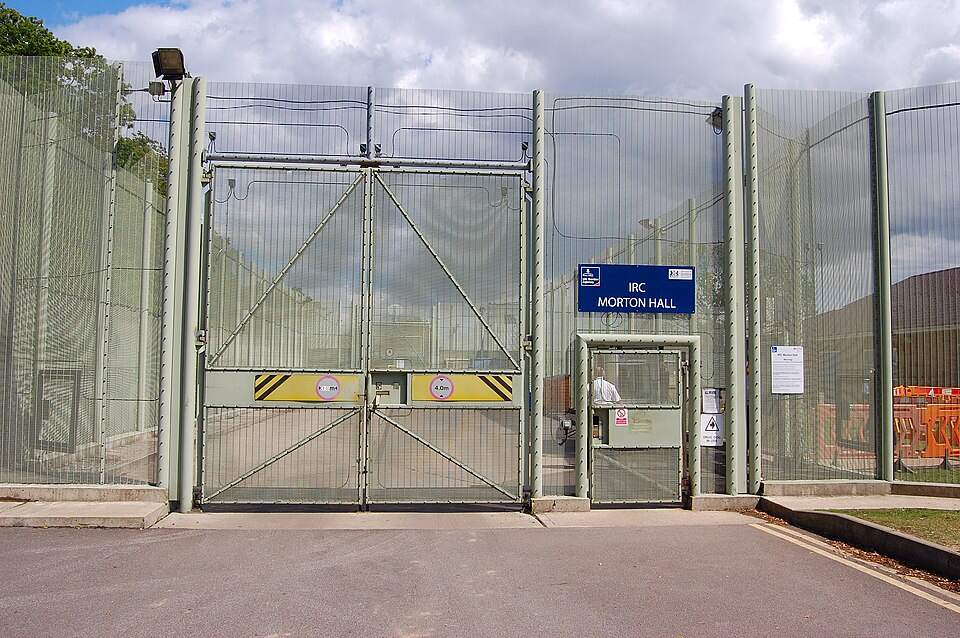 The 9-page report, By force of habit: How the use of force in immigration detention has lost sight of necessity and dignity, can be downloaded here.
IMBs, which monitor conditions and treatment of detainees at every immigration detention facility in the UK, have consistently highlighted the routine and often unjustified use of force at both immigration removal centres (IRCs) and short-term holding facilities (STHFs). As the report notes, immigration detention is a civil, administrative measure rather than a criminal sanction, yet the use of handcuffs on detainees has become standard practice.
At Gatwick, for example, the IMB found that nearly all detained individuals taken to hospital appointments were handcuffed. In one instance, a frail 70-year-old man was handcuffed despite paperwork showing no evidence of risk, while the duty director cited risk on escort to approve the measure.
The IMB noted: "Some detained people have told Boards they are reluctant to attend hospital appointments due to the stigma attached to being handcuffed in public, thus limiting access to healthcare for those requiring medical attention, and evidencing the potentially harmful and humiliating nature of such an approach."
The report highlights an inconsistent approach in restraint practices across detention facilities run by Home Office contractors. At Luton Airport, detained individuals are routinely handcuffed when escorted to removal flights, reportedly due to the preferences of airport authorities. In contrast, at Manchester and Birmingham airports, decisions are left to contracted escort staff, with some facilities restraining men but not women.
The IMB also highlighted missed opportunities for de-escalation, noting that language barriers and insufficient use of interpretation services sometimes led to unnecessary use of force. In one case, a detained person was restrained after failing to stand when asked, an action that may have been avoidable had translation services been used.
Despite many immigration detainees having experienced abuse, torture, or trafficking, the IMB found there is no evidence of a trauma-informed approach to the use of force on vulnerable individuals. Boards noted a consistent underestimation of the psychological impact of restraint, with little awareness of the inherent power imbalance between staff and detainees. It is commonplace for teams of officers to enter rooms without notice, fully equipped with personal protective equipment, shields, and helmets, often startling individuals who may be barefoot, partially dressed, or in their underwear. Such interventions exacerbate feelings of vulnerability and distress, particularly for those with prior traumatic experiences, and can unnecessarily escalate situations.
Mental health considerations are also frequently overlooked in planning force interventions. IMBs reported several cases where following the guidance provided in Vulnerable Adult Care Plans could have prevented the use of force. For example, one man with mental health difficulties had a Care Plan detailing measures to reduce distress, yet officers ignored this guidance when entering his room, leading to distress and subsequent restraint. Delays in notifying healthcare staff further compound the risk, with Gatwick IMB noting a case in which medics were not informed for more than four hours after a man had been banging his head against a wooden bed frame.
Concerns also extend to removals from the UK via charter flights. One man, identified as at risk of self-harm and under constant watch, was restrained during transfer, removed from the van and carried naked from the waist down onto the aircraft, soiling himself in the process, while staff attempted to manage him using physical restraint throughout the journey. Once on board, escorts continued to apply force to prevent injury and maintain control. The IMB says this case, among others, demonstrates the extreme vulnerability of some detainees and the extent to which removal relies on force, raising profound questions about the impact on dignity and the long-term mental health consequences for those involved.
Serious concerns were raised over staff attitudes and organisational culture in immigration detention settings towards the use of force. While IMBs observed instances where staff demonstrated empathy and skill in de-escalating incidents, there were recurring examples of behaviours and practices that suggest a broader cultural problem. The attitudes of some staff and trainers suggest a glamorisation of force and a disregard for core principles of lawful and ethical intervention, potentially influencing operational behaviour. IMBs also noted that a broader culture supporting professionalism, respect, and accountability appeared to be seriously undermined in some facilities.
Further concerns were raised about the recording and review of use of force incidents. IMBs found incomplete documentation, inaccurate records, and ineffective review processes, highlighting weaknesses in governance and accountability. One case involved a detainee restrained for over four-and-a-half hours with multiple devices, yet documentation lacked evidence to justify the extent of force applied. Reviews sometimes failed to address threats or inappropriate behaviour captured on video, and in some cases, the officer involved in an incident conducted the review themselves.
Elisabeth Davies, the IMB National Chair, commented: "The findings of this report are deeply concerning. For the use of force to be lawful, it must be necessary, reasonable, proportionate and justifiable, but what we are seeing is a system where restraint has become routine, oversight is weak, and the dignity of detained individuals is too often disregarded." She called on the Home Office to strengthen oversight, embed trauma-informed practices, and ensure that force is only used when absolutely necessary, warning that without urgent attention to detention culture, the rights and dignity of those held remain at risk.