Major new Open Rights Group report details wide-ranging concerns over Home Office's AI tools




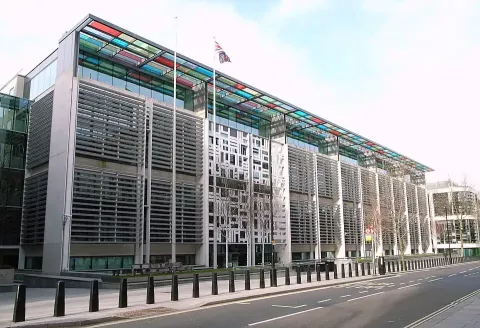
A very comprehensive new report by the Open Rights Group (ORG) examines the Home Office's expanding use of artificial intelligence (AI) in the UK's immigration system. It warns that the technology is being woven into crucial parts of the immigration system and it is set to shape all of it.
The 105-page report, Automated Discrimination: Unpacking the Digital Hostile Environment, can be downloaded here.
ORG argues that successive UK governments, including the current Labour administration, have increasingly turned to AI to manage immigration and border control, treating migration as a technical problem that can be addressed through technological solutions.
Fabio Chiusi, the author of the report, commented: "The way in which the UK is rushing towards the adoption of artificial intelligence in the immigration system is a textbook example of technological solutionism. Driven by a securitised, repressive approach to migration, the UK's embrace of AI can only reinforce the illusion that immigration is a technological bug at the heart of British society — one that only technologies of discrimination and control can fix."
The report details a range of AI applications being trialled or used in the immigration system, including estimating the age of asylum seekers, summarising asylum interviews and immigration policies, helping prioritise asylum claims, searching mobile phones for evidence of suspected immigration offences, and automatically flagging potentially 'sham' marriages.
It also describes a shift towards more proactive enforcement, with live facial recognition trialled at the Port of Holyhead to identify people subject to deportation orders, alongside predictive analytics and risk assessment tools such as the Home Office's Cerberus project, which is intended to identify potential threats.
ORG says the Home Office's use of AI raises a number of grave concerns.
The report states: "The UK frames itself as a technology 'adoption nation', a term coined by the Government to signal AI's rapid integration into an all-encompassing array of administrative functions. However, the term obscures a dark side made of bias, discrimination, entrenched privilege, and locked-in surveillance technologies that provide the infrastructure for authoritarian repression, as demonstrated in the AI-informed mass deportations and abuse seen from the Trump administration."
According to the report, AI relies on pattern matching rather than 'intelligence' and it can reproduce or amplify bias in their data, potentially leading to discriminatory outcomes for migrants and people seeking asylum. It explains: "[D]eep learning algorithms do more than produce logical outputs. They also reveal and reinforce societal power imbalances by identifying and generating patterns from datasets that contain hostile narratives about migration. This turns the technology into a political instrument that both implements and shapes immigration and border procedures."
The use of generative AI to summarise asylum interviews is highlighted as particularly problematic. The report warns that such tools can produce inaccurate summaries or introduce information that was not present in the original material, potentially affecting the assessment of asylum claims.
Transparency is another major concern. According to the report, Home Office responses to freedom of information requests have often been limited by national security exemptions, leaving significant gaps in public understanding of how AI systems are being used, what safeguards exist and how they affect decisions.
The report says the systems "operate in near-total secrecy" and it notes: "Opacity is a foundational issue, affecting all analyses of the use of AI in immigration. How can the public determine in an evidence-based manner whether Anduril towers deployed in the Channel actually contribute to saving lives or ending them, when their very existence is shrouded in secrecy and the results of their operations are forcefully kept out of the public record? How can the public judge whether automated risk assessments performed by Cerberus ultimately result in the automation of racial profiling when we cannot even know whether it is based on rules or machine learning algorithms?"
ORG also raises concerns about the role of private contractors, noting that many technologies used in UK immigration and border operations are supplied by foreign companies, including firms based in the US and Israel.
The report sets out five broad recommendations: rejecting the use of AI as a substitute for addressing the underlying causes of immigration policy problems; introducing stronger regulation of high-risk systems; improving transparency and public accountability; reducing dependence on powerful technology companies; and addressing the wider political and policy context in which AI is deployed.