Education Committee says Government must set out how universities will stay financially viable with fewer international students




In a major new report on university funding published today, the House of Commons Education Committee warns that financial pressures across the higher education sector have driven a growing reliance on international students, which it says has been directly shaped by government decisions on immigration.
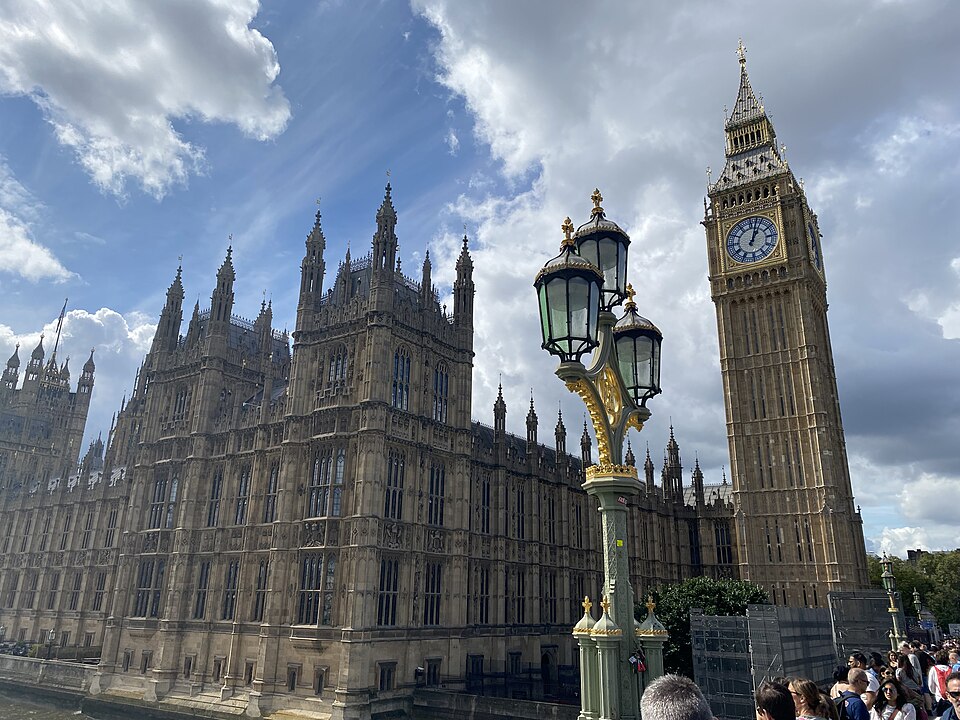 Image credit: WikipediaYou can download the 142-page report here or read it online here.
With the higher education sector in England now facing a financial crisis and with international students contributing 45% of universities' fee income, the Committee stresses that immigration policy has a major bearing on universities' financial stability and argues the Government must take a more joined-up approach. It warns that if ministers intend to reduce international student numbers, they must also set out how institutions will remain financially sustainable.
The Committee is particularly clear on the role of the Home Office, stating: "The Home Office plays a significant, even preeminent, role in the financial health of the higher education sector." It says this reflects the extent to which international student recruitment is affected by immigration rules, and highlights criticism in evidence submitted to its inquiry that policy is not sufficiently coordinated across government. MPs also expressed regret that the Home Office was not made a co-owner of the Government's International Education Strategy, arguing this points to wider fragmentation between departments including the Office for Students, UK Research and Innovation, and Skills England.
The Committee recommends that "the Home Office should be made a co-owner of the International Education Strategy and commit to adhering to it in future immigration policy that affects international students," alongside stronger cross-government coordination on higher education policy. It warns that current arrangements risk policy inconsistency, particularly where immigration objectives and education funding pressures intersect.
On post-study work routes, the report notes that changes to the Graduate Visa under both the previous and current governments have influenced international student numbers, contributing to both the earlier rise after 2021 and the subsequent decline over the past three years. The Committee warns these reforms also risk weakening the UK's position against competitors such as Australia and Canada. It recommends that the Government closely monitor the impact of the changes and publish an independent evaluation one year after the reduction in the visa duration to 18 months takes effect.
The report also examines proposed tightening of Basic Compliance Assessment (BCA) rules for institutions sponsoring international students, aimed at addressing concerns about system abuse. While the Committee supports the objective, it highlights strong concerns from the sector about how the new thresholds will be implemented, measured and publicised. It also warns that, at a time when demand from key markets such as China is expected to fall, it is increasingly important that universities are able to diversify recruitment sources. MPs caution that the reforms risk working against this goal, despite it being part of the Government's International Education Strategy.
The Committee calls on the Government to address concerns about implementation by using real-time data, avoiding reliance on international ranking metrics, phasing in changes, and ensuring smaller providers are not unfairly penalised. It also urges ministers to set out how the BCA regime will support rather than undermine efforts to diversify international recruitment.
Section 6 of the report covering international students and the impact of the Government's reforms is reproduced below:
House of
Commons
Education Committee
Higher Education and Funding: Threat of Insolvency and International Students
Ninth Report of Session 2024–26 HC 807
[…]
6 International Students: Impact of the Government's reforms
Trends with international students
203. Students from overseas have been coming for centuries to study at universities in the UK. In the last few years there have been marked shifts in numbers. In March 2019 the then Government set a target of raising to 600,000 the total number of international students studying in UK Higher Education. Subsequently, the graduate visa, a post-study visa, was introduced. The numbers of international students studying in UK higher education rose to 600,180 by 2020/21 and 758,865 by 2022/23, before declining to 685,565 in 2024/25. These changes mainly reflect alterations in the numbers studying postgraduate taught courses. The vast majority of these students were from outside of the European Union. The proportion and numbers who came from the European Union fell in each year throughout this period. Overall, the numbers studying in 2024/25 still exceeded the total for all but the two previous academic years. [416]
204. More recent data shows a much-varied picture. In the year ending in January 2026 the number of sponsored study visa applicants numbered 417,000, which was 2% higher than the applicants in the year ending January 2025, but 12% lower than the year ending January 2024. [417] The monthly number of main applicants for sponsored study visas, compared to the same month the previous year has fallen for six months (from October 2025 to March 2026) in a row. [418] Data published by the Office for Students, which looked at the number of confirmations of acceptance for studies in February to September 2025 compared to February to September 2024, showed a 6.3% increase in 2025 compared to 2024. The only type of institution where there had been a fall was among larger research-intensive institutions. [419] There are also clearly differences between institutions. For example, in October 2025 UCL had to request extra compliance of acceptance for studies documents from the Home Office, after exceeding the number allocated for this year. [420] This contrasted with the specialist postgraduate Cranfield University which told us it had experienced a 47% decrease in international student numbers over the last two years. [421]
205. The reduction in international student numbers since 2022/23 partly reflects changes brought in by the previous Government. In May 2023 the then Government announced restrictions to the rules to the graduate visa, preventing those studying for or graduated from postgraduate taught degrees from bringing in dependants (those on postgraduate research degrees still can), and banning students from switching to a work route before completing their studies. These rules were implemented from 2024 onwards. The Office for Students told us other factors included "volatility in currency exchange rates", which was a particular issue in Nigeria, along with press speculation about potential policy changes. [422] The changes brought in by the previous government was criticised in various submissions, including for reducing international student numbers, and putting additional financial strain on the higher education sector. [423] In January 2025 the House of Lords Science and Technology Committee also urged the Government to consider granting exemptions to its dependents ban for postgraduate taught courses, fearing it has disproportionately impacted STEM courses. [424] One consequence of the restriction of dependents has been an increase in the numbers entering the MRes (Masters of Research) course which is deemed a postgraduate research qualification. [425]
206. Criticism was also voiced of the previous Government's measure of raising the salary threshold for the skilled worker visa, which was thought to have made it harder to recruit staff from abroad. [426]
The importance of international students
207. We received considerable evidence detailing the importance of international students. This included their financial significance to the higher education sector. Through a combination of the markedly higher fees they pay and the courses they study, although international students constitute only a quarter of all students, they pay over 45% of fee income. These fees represent a financial surplus used to cross-subsidise research and domestic teaching. As Professor Brian Bell, Chair of the Migration Advisory Committee, stated "unless you have a profitable section then you are bankrupt, and that is what international students do". [427] This was balanced by concerns that international students can be treated as "cash cows" and not valued for their wider contribution to higher education and beyond. [428] At the same time, the Social Market Foundation highlighted: "Stand-alone changes to visa rules simply increase the risk of insolvency without fixing the underlying structural issues that have led the sector to depend on international students". [429] The Engineering Professors' Council similarly said, within the context of engineering courses, "Government should urgently embed international recruitment into a sustainable funding strategy, rather than allowing it to remain the only viable backfill for domestic underfunding". [430] This reflected a wider view that Government immigration policy had to take account of its impact on the financial sustainability of the higher education sector. [431]
208. Alongside this financial benefit, the wider economic benefit of international students was stressed. We were told that "[i]nternational students represent a direct export value to the UK of over £20 billion", a figure cited in the Government's 2025 Immigration White Paper. [432] In 102 parliamentary constituencies, higher education ranked among the top three exports sectors (it is the largest in 26). [433] Several submissions highlighted research by Public First which shows UK residents are £355 better off annually due to international students, with working adults being £466 better off. In some parliamentary constituency benefits were calculated at over £2,000 per person. [434] This reflected wider evidence stressing the economic benefits of international students, such as founding new businesses, and supporting the local economy: for instance, Hull University stated that "every four international students support an extra full-time job in the city". [435] The ability of international students to develop businesses was also evident from our conversations with the students we met at Warwick University, several of whom had already formed plans to develop new companies and demonstrated a strong entrepreneurial spirit.
209. The non-economic benefits of international students were also stressed in written evidence. Kent University stated it believed "recruitment of international students is a good in itself". [436] Another submission summed up the variety of benefits by stating international students "enrich intellectual life, expand pedagogical diversity, and contribute to a more globally literate academic community". [437] Research by the Russell Group's Students' Unions found one in five international students volunteered during their time at university. [438]
210. Evidence we received also stressed the benefits to the students' home countries as returnees could bolster democratic institutions, improve public services, and reduce poverty and gender inequality. [439] This reflected a wider claim that international students contribute to the UK's soft power. [440]
211. The benefits of international students can also be matched by the benefits of staff with an international background. For example, TechUK told us 60% of research produced in the UK has an international co-author. [441]
212. There were three caveats to this support for international students. First, Dani Payne, Social Market Foundation, noted research into the benefits of international students had been commissioned by the higher education sector, and other economists had cast doubt on the exact scale of the estimated economic benefit brought by international students. She did acknowledge nonetheless that international students did bring "a larger economic benefit and that that is widespread across the UK, particularly in regions where the Government have an interest in expanding opportunity and expanding local economies". [442] Secondly, Payne was among those who noted that the rapid increase in international students had outstripped increases in local housing. [443] Professor Bell, Chair of the Migration Advisory Committee, proposed introducing number controls at an institutional level on the number of international students dependent on engagement with the local community. [444] Thirdly, there was a wish to ensure there were high standards of English proficiency and concerns about poor-quality English tests. [445]
213. CONCLUSION
The financial pressures on the higher education sector have driven the sector's reliance on international students. This reliance has been directly driven by decisions of the Government. Immigration policies have a very significant effect on the higher education sector, and the Government must consider the consequences of its decisions in a joined-up way. If the aim is to have fewer international students, the Government must set out how it will support the financial sustainability of higher education institutions.
The Government's Immigration White Paper
214. On 12 May 2025 the Government published Restoring Control over the Immigration System. This White Paper outlined a series of proposed reforms affecting international students:
- A reduction in the time that Masters graduates can remain in the UK after their studies from 2 years to 18 months. New regulations, published on 14 October 2025, will implement this change from January 2027. [446]
- "The Government will explore introducing a levy on higher education provider income from international students, to be reinvested into the higher education and skills system. Further details will be set out in the Autumn Budget."
- "We will ensure there are arrangements, for future international student recruitment, for sponsoring institutions to demonstrate that they are considering local impacts when taking its decisions on international recruitment."
- Toughening the requirements for meeting the Basic Compliance Assessment (BCA), the annual assessment that monitors each sponsoring institution.
- A commitment to make it easier and simpler "for top scientific and design talent to use our Global Talent visa", and reviewing the Innovator Founder visa to support "entrepreneurial talent currently studying at UK universities to move into the [Global Talent] visa so that they can build their business and career in the UK". [447]
215. These proposals have been accompanied by Government comments emphasising that international students are welcome. [448] However, the evidence we heard contrasted the Government's welcome with its specific proposals, [449] and there was strong criticism of the Immigration White Paper. [450] We explore several of these proposals in more detail during this chapter and the next.
216. Although our inquiry mainly focused on the proposed changes to immigration rules, we also heard strong criticism, for example from the Royal Society and other science-focused bodies, of the cost of UK student and graduate visa fees and the immigration health surcharge, which were thought to be higher than in competing countries. [451] We also received various submissions ranging from academics to individual universities and trade unions, calling for the removal of students from the net migration figures. This was primarily grounded in the argument that students are only here temporarily. [452] The Chair of the Migration Advisory Committee, Professor Bell, rejected this argument. He noted the UN definition of migrants included anyone staying in the country for over a year, and with regards to excluding students from the net migration target he argued students should not be treated as "special people … They add to the population when they are here and we should count them for that". He said that if the same number came in and left to study net migration would be zero; but the issue has been a higher proportion are staying on beyond the completion of their studies. [453] Dani Payne, Social Market Foundation, noted exclusion from net migration figures in Australia and Canada did not prevent "much harsher measures on international students going into those countries". [454]
217. Baroness Smith told us that the Government agreed that international students brought a net gain to the country. She said "[w]e believe that international students bring enormous economic, social and cultural value to the country and to the higher education sector". [455] She also said there was a responsibility on universities to work with local authorities "to make sure that the housing of students does not have a bad impact on local housing provision". [456] The Immigration White Paper aimed to reduce net migration, and she argued there was "a pretty balanced package with respect to students". [457]
Department oversight and the International Education Strategy
218. As outlined earlier in our report, several government departments have a strong influence on the fortunes of higher education. During the course of our inquiry the Government was preparing a revised International Education Strategy that would be co-owned by the Department for Education, Department for Business and Trade (DBT) and the Foreign, Commonwealth and Development Office (FCDO). This was subsequently published in January 2026. This review, following on from those in 2019 and 2021 under the previous Government, aimed to be "an effective tool in increasing the value of education exports, promote policy dialogue and reflect the priorities of education stakeholders, businesses and Ministers". [458]
219. Submissions we received about the Strategy emphasised the need for a cross-departmental approach, [459] along with an awareness of regional considerations with proposals for regional targets or regional champions to work alongside the International Education Champion, Professor Steve Smith. [460]
220. The importance of cross-departmental working was doubly significant because we received evidence on the importance of the Home Office in higher education. [461] We heard evidence there was confusion between different departments, and that policies made by the Home Office were adding to the financial challenges facing higher education. [462] Evidence from Professor Roger Brown and Dr Helen Carasso stated that:
Successive Governments have promised a long-term solution to higher education's funding but in practice the solution has increasingly been for universities to rely on income from international students to offset losses on teaching home students, postgraduate provision and research. As a result, Government migration policy is of far more importance to the sustainability of the sector than Government policy on higher education. [463]
221. We asked Baroness Smith to explain why the Home Office was not due to be a co-owning department for the International Education Strategy. She said that although the review was being led by the Department for Education, the Department for Business and Trade, and the Foreign, Commonwealth and Development Office, this was "a government publication and Government Departments will have had a contribution to it". She further stated there were "good discussions with the Home Office" over implementing the basic compliance assessment, and Immigration White Paper, with a "good and strong, sometimes lively, relationship" between the departments. [464]
222. The International Education Strategy published in January 2026 focused on three core ambitions, to "increase the UK's international standing through education", to "sustainably recruit high-quality international students", and "collectively grow education exports to £40 billion per year by 2030" compared with £32.3 billion in 2022. Leadership of the agenda would be held by the three co-owning departments, alongside an Education Sector Action Group, which would be chaired by a minister and bring together representatives of industry, government and representative bodies. [465]
223. CONCLUSION
The Home Office plays a significant, even preeminent, role in the financial health of the higher education sector. This is because international students are heavily affected by changes in immigration rules. This influence came in for some strong criticism in written evidence, and we heard differing views on whether to include international students in the net migration target. We regret that the Home Office was not a co-owner of the Government's recently published International Education Strategy, though the strategy did include a focus on sustainable international recruitment that linked to the approach pursued in the Immigration White Paper. The lack of a direct role for the Home Office reflects a wider issue of coordination between the Office for Students, UKRI, Skills England, and the different government departments that directly and indirectly affect higher education.
224. RECOMMENDATION
The Home Office should be made a co-owner of the International Education Strategy and commit to adhering to it in future immigration policy that affects international students. This should be alongside stronger coordination across the Government on higher education policy.
Graduate Visa Changes
225. One major driver of expansion in international student numbers was the introduction, in 2021, of a graduate visa. International students studying for a bachelor's, postgraduate, or certain legal or education courses, can apply for a graduate visa, which permits PhD and other doctoral students to stay for 3 years, and others for 2 years. In addition, there is an £880 application fee and £1,035 health surcharge. In 2024 41% of graduating international students moved onto the graduate visa. [466] Following the proposal in the Government's Immigration White Paper, from 1 January 2027 the 2 years period will be reduced to 18 months. [467] The Immigration White Paper justified this change on the grounds that a significant majority of graduate visa holders were not working in graduate level jobs, described as Regulated Qualifications Framework (RQF) Level 6 jobs, although 62% were earning within a month of their visa starting and 90% within six months. [468]
226. The Government's impact assessment estimated the changes would reduce international students by 10,000 by 2026/27, and therefore would have only a small impact on individual institutions. The Government's estimate was based on findings that 14% of student visa holders would be deterred if the graduate visa did not exist, then taking a quarter of that figure (3.5%) to estimate. The assessment also expected the changes would "prompt higher education institutions to adapt by targeting alternative markets to recruit students". [469]
227. The evidence we received focused on the impact of the reduction in the length of the graduate visa. Written evidence from Glasgow University noted that the "key pressure point for graduates is the transition into secure employment", with the risk either that students did not come to the UK, or exacerbate graduate underemployment and precarious work. It argued the reduction in visa length was unlikely to increase the share of graduates entering RQF level 6 professions. [470] IDP Education, which compares the UK with other potential destinations, also argued that students were not mainly aiming for permanent residency, but improving medium-term employability outcomes focused on their home country or third country markets. [471] There were also concerns the policy would deter international students from coming to the UK by reducing its attractiveness as a destination for international students with knock-on negative financial consequences for higher education institutions. [472] The Russell Group noted the UK's post-study work visa was already less attractive than Australia, Canada and New Zealand, noting Australia offers a 2 to 3 year post-study visa (depending on qualification) and Canada offers 3 years. [473] It argued the change could cause a reduction of 10% in international student numbers and cost its members over £500 million a year in tuition fee income. [474]
228. Consequently, we heard calls either for a reversal of the past and present Government's policies on the graduate visa, [475] or for stability on rules in the future. [476] We were also told by Dr Pilsbury from the International Higher Education Commission that "The problem with the graduate route is that nobody owns it", and there was a need for oversight to connect SMEs with graduate workers. [477]
229. There has been support for the changes. The Migration Advisory Committee has been somewhat sceptical about the graduate visa from its inception. Professor Bell, Dani Payne (Social Market Foundation) and Dr Pilsbury all agreed the changes would not make a huge difference to the numbers. [478] However, Professor Bell did acknowledge that changes made in July 2025 altered the threshold for skilled workers to only include graduate jobs, which would "essentially close down the transfer from the graduate route into the skilled work route for a large percentage of those who are currently on the graduate route". [479]
230. CONCLUSION
We heard concerns about changes to the Graduate Visa under the previous and present governments. The graduate visa was one factor in the increase in international student numbers after 2021, and the changes since 2023 have been a factor in the subsequent reduction in the number of international students in the last three years. These changes also mean the UK compares unfavourably to major competitor markets in Australia and Canada.
231. RECOMMENDATION
The Government should carefully monitor the impact of its graduate visa changes, and publish an independent evaluation of the changes one year after the reduction to 18 months for undergraduate and taught postgraduate students takes effect.
Basic Compliance Assessment (BCA)
232. A second set of changes in the Immigration White Paper which we received considerable evidence about were changes to the Basic Compliance Assessment rules. Each year a higher education provider must meet the requirements of a Basic Compliance Assessment to continue to be permitted to sponsor international students. The core requirements are that the sponsoring provider must have:
- A visa refusal rate of less than 10%.
- An enrolment rate of at least 90%.
- A course completion rate of at least 85%.
- A provider can also fail where "UKVI [UK Visa and Immigration] is not satisfied that the sponsor should pass the Basic Compliance Assessment following a discretionary assessment", with the provider given 20 days to make representations against the decision. [480]
233. The Immigration White Paper expressed concerns that people had used student visas to gain entry to the UK "without any intention to complete the course", and graduates claiming asylum after their course had ended "even though nothing substantive has changed in their home country". The current BCA thresholds were therefore deemed "too lenient and have left the route open to abuse and exploitation". [481] Accordingly, the White Paper proposed altering the rates:
- A visa refusal rate of less than 5%.
- An enrolment rate of at least 95%
- A course completion rate of at least 90%.
- In addition, introducing a published traffic light Red - Amber - Green banding system to rate the performance of each sponsor. There would be new interventions where providers "are close to failing their metrics", with bespoke action plans to ensure compliance.
- All providers wishing to use recruitment agents for overseas students would have to sign up to the Agent Quality Framework to ensure the highest standard of agent management. [482]
234. This proposal met with mixed views in the evidence to the inquiry. We received several criticisms of the proposals, partly framed as ways in which the Home Office should constructively implement these changes. First, stress was laid on the need to phase in the new thresholds. The British Universities' Liaison Association (BUILA) argued that the "earliest viable point" was 2027–28 so institutions could plan ahead of recruitment. [483] Universities UK also argued that complete thresholds should not be applied when students were recruited under previous BCA thresholds. [484]
235. Secondly, there was opposition to publishing the traffic light system. BUILA argued this rating could be confused for a judgement about course delivery, student experience and graduate outcomes; and more widely damage the reputation of the sector. Universities UK echoed these concerns, fearing it "could be misunderstood by banks and sponsoring bodies, affecting students' ability to secure finance or visas even where no formal action has been taken against the institution concerned". [485]
236. A third, related set of concerns, was the metrics be used would be problematic. Million Plus and the Cathedrals Group of Universities were among those arguing that a metric focused on students not completing a course would disproportionately affect providers with small numbers of international students; [486] whilst BUILA argued there could be legitimate reasons for removing a student from a programme, such as a lack of academic progression, and therefore such students should not be included in the completion metric. [487] There was a further concern that the media would only focus "on failures" and therefore damage the UK brand overseas. Hence BUILA stressed the need for positive publicity. [488]
237. Fourthly, several submissions called for real-time sharing of data from UK Visa and Immigration (UKVI). [489] At present, as Universities UK, noted updates are shared months "after a threat or issue has been identified". [490]
238. Fifthly, there is a risk the changes will lessen the diversity of markets that higher education providers recruit from. As University Alliance noted UK international student recruitment is "concentrated in a few countries". [491] BUILA told us "At a recent BUILA forum of international directors, nearly two thirds of respondents said that the BCA metrics would impact or significantly impact student and course diversification objectives". [492] In oral evidence Rachel MacSween, IDP, reiterated this risk, noting that modelling shows 22 universities would not meet the new metrics if they were assessed now. She also argued the more financially secured Russell Group universities tend to already be operating in low-risk recruiting markets, and therefore it is other higher education providers who are more exposed. [493] The need to diversify was emphasised both in the evidence we received, and during our visit to Warwick University. This is needed due to the growth of other countries as alternative destinations for international students. Furthermore, the market among Chinese students may fade through a combination of graduate underemployment in China and the increasing reputation of Chinese universities. [494] As Dani Payne also observed, different students have different priorities—students from Nigeria and India being more focused on "how welcoming they perceive that country [of study] to be and the employment prospects that they might get from studying in that country", whereas students from China "tend to be more drawn towards the prestige of the institution and the specific course". [495] There have been press reports that the BCA threshold is causing higher education providers to withdraw from certain markets. For example, London Metropolitan University has withdrawn from recruiting from Bangladesh due to an increase in the number of visa refusals from that country. Sunderland University similarly ceased recruitment from Sudan, Iran, Iraq, Syria and Yemen. [496] However, a lessening of diversification would run contrary to the Government's International Education Strategy which stated the Government "will encourage institutions to diversify their recruitment, reducing reliance on any single country and strengthening cultural exchanges on UK campuses". [497]
239. Finally there were concerns that the approach taken was too broad-brush, and, as the University of Kent stated: "a better policy would be to target institutions of concern, rather than imposing new blanket targets across the sector that will add costs and discourage applications". [498] Equally, the Cathedrals Group strongly criticised the White Paper's reference to university rankings, arguing these were commercially-driven, reflected "historic patterns of research funding" and did not account for the impact of universities in their local area. [499]
240. Professor Bell, Migration Advisory Committee, although supportive of the measures, caveated this by questioning how the rules would be enforced, noting that were a provider to fail a metric and have its licence to recruit international students suspended that "would immediately destroy the finances of the university". Therefore, a different approach to the current method, which he described as "rather sledgehammerish and disastrous" was needed. [500]
241. However, Professor Bell also said he was "strongly in favour" of the Government's proposed tighter compliance measures. He argued that the public expect high compliance, and the metric data should be published because "The public have a right to know what those numbers are". [501] His view was supported in written evidence by the University of York, which stated: "The Immigration White Paper makes a number of sensible suggestions around ensuring a higher level of Basic Compliance Assessment for visas to 95%, for example". [502]
242. Baroness Smith defended the changes. She argued the overall Immigration White Paper was " a pretty balanced package with respect to students". She argued that students should come to bring economic, social and cultural benefits
not to take advantage of the immigration system, which was the reasoning behind strengthening the basic compliance measures that universities have to fulfil. We also recognised that there is an impact from bringing more students into the country and into any particular community. [503]
243. In the time since our session with the Minister, the changes to BCA have been delayed until June 2026. The approach of the Government does appear to include students recruited in January 2026. The January intake was accompanied by "unavoidable delays" in the Home Office conducting "mandatory checks". [504] However, the Home Office is reportedly considering introducing transitional measures and discretion in the first year, and for providers typically enrolling fewer than 100 international students. [505] In March 2026 the Home Secretary also prohibited study visas for people coming from Afghanistan, Cameroon, Myanmar and Sudan to reduce the number of subsequent asylum claims. [506]
244. CONCLUSION
We understand the Government's wish to crackdown on abuse of the student visa system. The Government has decided to pursue this objective through reforming the BCA requirements. We have heard concerns from higher education providers and stakeholders about the implementation of the tougher BCA requirements, particularly how they would be measured and publicised. We heard that the international student market is changing with demand from China expected to decline. This makes it vital that HE institutions can diversify the countries which they recruit from. However, the BCA reforms appear to be deterring HE institutions from diversifying where they recruit from, despite this being an objective supported by the Government's International Education Strategy.
245. RECOMMENDATION
The Government should address the concerns raised by higher education providers about how they will monitor the tougher BCA targets for institutions. It should commit to using real-time data, avoid using unreliable international ranking metrics, consider phasing in the changes, and ensuring the metrics do not treat smaller providers unfairly.
246. RECOMMENDATION
The Government response should also outline how its approach on BCA will help rather than harm attempts to diversify where higher education providers recruit international students from.
_____________________________
[416] Higher Education Statistics Agency, Where do HE students come from?, Table: HE student enrolments by permanent address, SB273 Figure 9, 27 January 2026
[417] Home Office, Monthly entry clearance visa applications, January 2026, 12 February 2026
[418] Home Office, Monthly entry clearance visa applications: data tables, March 2026, 9 April 2026
[419] Office for Students, Financial sustainability of higher education providers in England: November 2025 update, November 2025, p. 6
[420] The Guardian, Home Office grants extra visas for UCL international students told to defer, 6 October 2025
[421] Cranfield University (HEF0060)
[422] Office for Students (HEF0098). For trends by different countries see Higher Education Statistics Agency, Where do HE students come from?, Chart: Entrant students with a permanent address outside the UK by permanent address, OC051 Chart 6, (accessed 27 January 2026)
[423] University of Hull (HEF0047). See also Academy of Social Sciences (HEF0007), Glen O'Hara (HEF0009), Professor Maia Chankseliani (Associate Professor of Comparative and International Education at University of Oxford) (HEF0011), Campaign for Science and Engineering (CaSE) (HEF0020), Unite the Union (HEF0025), Institute of Physics (HEF0031), University of Northampton (HEF0032) Engineering Professors' Council, Engineering Council (HEF0033), Royal Society of Chemistry (HEF0036), UK Council for International Student Affairs (UKCISA) (HEF0039), Newcastle University (HEF0046), The British Academy (HEF0051), UNISON (HEF0055), Cranfield University (HEF0060), techUK (HEF0065), Destination for Education (HEF0066), National Centre for Universities and Business (NCUB) (HEF0067), BUFDG (HEF0068), BUILA (HEF0071), International Higher Education Commission (HEF0074), Independent Higher Education (HEF0076), UCU (HEF0078), Mr Chris Pritchard (Senior Lecturer at Nottingham Trent University) (HEF0080), Institute for Fiscal Studies (HEF0081)
[424] Letter from the House of Lords Science and Technology Committee to the Home Secretary, Chancellor of the Exchequer and Minister for Science, dated 30 January 2026
[425] Times Higher Education, Home Office issues warning as new data shows extent of MRes boom, 17 February 2026; WonkHE, Is the growth of international MRes recruitment a problem?, 4 February 2026; Times Higher Education, Universities enrol hundreds more MRes students despite warnings, 23 January 2026; WonkHE, The MRes boom isn't just an issue of visa policy, 10 March 2026
[426] Unite the Union (HEF0025), UK Council for International Student Affairs (UKCISA) (HEF0039), UCU (HEF0078)
[428] For example, Ann Smith (HEF0086)
[429] Social Market Foundation (HEF0087)
[430] Engineering Professors' Council, Engineering Council (HEF0033)
[431] Aston University (HEF0016), Newcastle University (HEF0046), Russell Group (HEF0026)
[432] University of Glasgow (HEF0014), Russell Group (HEF0026), UK Council for International Student Affairs (UKCISA) (HEF0039), University of York (HEF0041)
[433] The British Academy (HEF0051), Dr Jack Willoughby (Institute for Policy Manager at University of Leicester) (HEF0064)
[434] UK Council for International Student Affairs (UKCISA) (HEF0039), University of York (HEF0041), Dr Jack Willoughby (Institute for Policy Manager at University of Leicester) (HEF0064), techUK (HEF0065)
[435] University of Hull (HEF0047). See also Mr Richard Stott (Group Managing Director at The Kexgill Group) (HEF0005), Cambridge University Press & Assessment (HEF0018), Sheffield Hallam University (HEF0045), Newcastle University (HEF0046), Imperial College London (HEF0054), London Higher (HEF0056)
[436] University of Kent (HEF0043)
[437] Professor Maia Chankseliani (Associate Professor of Comparative and International Education at University of Oxford) (HEF0011); see also The Chartered Association of Sport and Exercise Sciences (CASES) (HEF0019), Dr. Caroline Kamau-Mitchell (University academic at Birkbeck, University of London) (HEF0030), Royal Society of Chemistry (HEF0036)
[438] Russell Group Students' Unions, Students' Union UCL (HEF0058)
[439] Professor Maia Chankseliani (Associate Professor of Comparative and International Education at University of Oxford) (HEF0011)
[440] Mr James Pitman (Managing Director at Study Group) (HEF0040)
[443] Q81, Q89 (Dani Payne); see also Q90 (Professor Bell) and University of York (HEF0041)
[445] The Chartered Association of Sport and Exercise Sciences (CASES) (HEF0019), Cambridge University Press & Assessment (HEF0018), University of York (HEF0041). For a different emphasis see UCU (HEF0078)
[446] Home Office, Statement of Changes in Immigration Rules, HC (2024–26) 1333, 14 October 2025, p. 48
[447] Home Office, Restoring Control over the Immigration System, CP 1326, 12 May 2025, pp. 26, 36–37, 74
[448] See for example Letter from the Secretary of State to the Committee, 14 May 2025
[449] UK Council for International Student Affairs (UKCISA) (HEF0039)
[450] Academy of Social Sciences (HEF0007), Universities Geoscience UK (HEF0035), UCU (HEF0078)
[451] Royal Society (HEF0097); see also Campaign for Science and Engineering (CaSE) (HEF0020), Engineering Professors' Council, Engineering Council (HEF0033), UK Council for International Student Affairs (UKCISA) (HEF0039), Universities UK (HEF0093)
[452] Mr Richard Stott (Group Managing Director at The Kexgill Group) (HEF0005), Academy of Social Sciences (HEF0007), Professor Maia Chankseliani (Associate Professor of Comparative and International Education at University of Oxford) (HEF0011), Aston University (HEF0016), Institute of Physics (HEF0031), Mr James Pitman (Managing Director at Study Group) (HEF0040), Russell Group Students' Unions, Students' Union UCL (HEF0058), Destination for Education (HEF0066), National Centre for Universities and Business (NCUB) (HEF0067), UCU (HEF0078)
[453] See Office for National Statistics, Reason for international migration, international students update: February 2026, 27 February 2026
[454] Q91 (Professor Bell), (Dani Payne)
[458] UK Government, Professor reappointed as UK's International Education Champion, 27 September 2024
[459] Professor Sam Illingworth (Professor at Edinburgh Napier University) (HEF0004), Destination for Education (HEF0066), MillionPlus, The Association for Modern Universities (HEF0075), Universities UK (HEF0093)
[460] Mr James Pitman (Managing Director at Study Group) (HEF0040), International Higher Education Commission (HEF0074); see also The All Party Parliamentary Group on International Students, The UK's Global Edge: Regional Impact and the Future of International Students, 5 September 2025
[461] Q93 (Dr Pilsbury), Professor Sam Illingworth (Professor at Edinburgh Napier University) (HEF0004), Mr James Pitman (Managing Director at Study Group) (HEF0040)
[462] The Cathedrals Group of Universities (HEF0037). See also UCU (HEF0078), Policy Connect (HEF0083)
[463] Professor Roger Brown (Professor Emeritus and former Vice-Chancellor at Southampton Solent University); Dr Helen Carasso (Honorary Norham Fellow at Department of Education, University of Oxford) (HEF0012)
[465] UK Government, The UK's International Education Strategy: Excellence in Education, Partnerships for Growth, 20 January 2026, pp. 7–8, 14
[466] Home Office, Impact Assessment: Autumn 2025 Immigration Rules Impact Assessment (Graduate, Global Talent, High Potential Individual, English Language Requirements and Immigration Skills Charge) – October 2025, 14 October 2025, p. 22
[467] UK Government, Graduate visa, (accessed 4 March 2026)
[468] Home Office, Restoring Control over the Immigration System, CP 1326, 12 May 2025, pp. 34–35
[469] Home Office, Impact Assessment: Autumn 2025 Immigration Rules Impact Assessment (Graduate, Global Talent, High Potential Individual, English Language Requirements and Immigration Skills Charge) – October 2025, 14 October 2025, p. 26
[470] University of Glasgow (HEF0014)
[471] IDP Education UK and Ireland (HEF0050)
[472] Aston University (HEF0016), Campaign for Science and Engineering (CaSE) (HEF0020), Royal Town Planning Institute (HEF0021), UK Council for International Student Affairs (UKCISA) (HEF0039), Mr James Pitman (Managing Director at Study Group) (HEF0040), University of York (HEF0041), University of Kent (HEF0043), Newcastle University (HEF0046), IDP Education UK and Ireland (HEF0050), The British Academy (HEF0051), Russell Group Students' Unions, Students' Union UCL (HEF0058), Cranfield University (HEF0060), techUK (HEF0065), Destination for Education (HEF0066), National Centre for Universities and Business (NCUB) (HEF0067)
[473] Government of Canada, Work in Canada after you graduate, (accessed 4 March 2026); Australian Government, Temporary Graduate visa (subclass 485) Post-Higher Education Work stream, (accessed 4 March 2026)
[474] Russell Group (HEF0026). See also Q87 (Rachel MacSween), BUFDG (HEF0068), The University of Manchester (HEF0070)
[475] Glen O'Hara (HEF0009), University of Glasgow (HEF0014), Russell Group Students' Unions, Students' Union UCL (HEF0058), Chartered Association of Business Schools (HEF0072), UCU (HEF0078)
[476] IDP Education UK and Ireland (HEF0050), Destination for Education (HEF0066), International Higher Education Commission (HEF0074), Universities UK (HEF0093), University Alliance (HEF0094)
[478] Qq87–88 (Professor Bell), (Dani Payne), (Dr Pilsbury)
[480] UK Visa and Immigration, Student sponsor compliance, 16 January 2026
[481] Home Office, Restoring Control over the Immigration System, CP 1326, 12 May 2025, pp. 30, 37
[482] Home Office, Restoring Control over the Immigration System, CP 1326, 12 May 2025, p. 37
[484] Universities UK (HEF0093). See also The British Academy (HEF0051), MillionPlus, The Association for Modern Universities (HEF0075)
[485] BUILA (HEF0071), Universities UK (HEF0093). See also UK Council for International Student Affairs (UKCISA) (HEF0039), MillionPlus, The Association for Modern Universities (HEF0075)
[486] The Cathedrals Group of Universities (HEF0037), MillionPlus, The Association for Modern Universities (HEF0075); see also UK Council for International Student Affairs (UKCISA) (HEF0039)
[487] BUILA (HEF0071); see also London Higher (HEF0056)
[489] The Cathedrals Group of Universities (HEF0037), UK Council for International Student Affairs (UKCISA) (HEF0039), London Higher (HEF0056), BUILA (HEF0071), International Higher Education Commission (HEF0074)
[490] Universities UK (HEF0093)
[491] University Alliance (HEF0094)
[494] Q82 (Professor Bell), (Rachel MacSween)
[496] The PIE News, London Met withdraws from Bangladesh as new BCA thresholds loom, 25 July 2025
[497] UK Government, The UK's International Education Strategy: Excellence in Education, Partnerships for Growth, 20 January 2026, p. 37
[498] University of Kent (HEF0043). See also UK Council for International Student Affairs (UKCISA) (HEF0039)
[499] The Cathedrals Group of Universities (HEF0037)
[500] Q86 (Professor Bell). On the financial risk see also London Higher (HEF0056), Office of the Independent Adjudicator for Higher Education (HEF0062), Universities UK (HEF0093)
[502] University of York (HEF0041). See also University of Hull (HEF0047)
[504] The PIE News, "Unavoidable" Home Office delays disrupt January intake, 5 February 2026; Times Higher Education, Students miss January intakes amid visa delays ahead of new rules, 24 February 2026
[505] Times Higher Education, 'Chaos' expected as new visa compliance rules now due in June, 26 February 2026
[506] Home Office, Visa brake imposed on 4 countries after widespread visa abuse, 4 March 2026