Comprehensive study by academics from the University of Warwick and University of Leicester in partnership with Migrant Voice and the Open Rights Group




A major new report published last month by Migrant Voice and the Open Rights Group examines the UK's shift to a fully digital immigration status system and finds that the move has had wide-ranging and largely negative consequences for many migrants, affecting their ability to work, rent homes, travel and live with a sense of security.
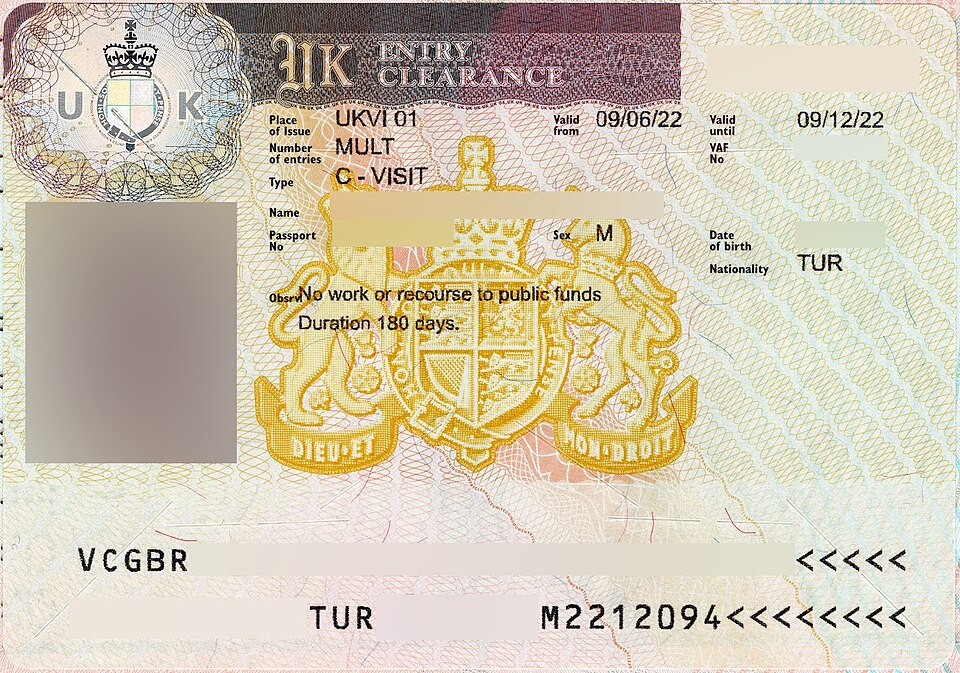 Image credit: WikipediaThe 72-page report, Exclusion by Design: Digital Identification and the Hostile Environment for Migrants, can be downloaded here. It was authored by Derya Ozkul, from the University of Warwick, and Marie Godin, from the University of Leicester, in partnership with Migrant Voice and the Open Rights Group.
The study examines the impact of the digital immigration status introduced through the EU Settlement Scheme (EUSS) and the eVisa system. Since June 2025, nearly all migrants legally resident in the UK have been required to prove their rights exclusively through an online Home Office account, with physical documents such as metric Residence Permits (BRPs) no longer accepted.
Researchers describe migrants as the first group in the UK to be subjected to a mandatory digital-only form of identification, effectively acting as a testing ground for wider digital ID ambitions.
The report states: "Migrants, both the EUSS and non-EUSS migrants, have effectively been treated as a test population for future digital identity infrastructures, with little regard for their personal circumstances, including disability, digital literacy, or access to technology, as well as their general fear of losing their rights due to being migrants. While migrants have served as 'technological testing grounds' in other contexts, such experiments have typically focused on managing external borders rather than governing populations within state borders. In this respect, the UK represents a distinctive and troubling case: it has piloted a digital identity system on migrants residing within its territory, effectively normalising experimental forms of digital identification on a specific, already precarious group before considering similar digital infrastructures for the general public."
Drawing on more than a year of research, including in-depth interviews with 40 migrants from over 20 nationalities, the report explores how digital status affects people's ability to work, rent homes, travel and access services, as well as its impact on wellbeing.
The findings point to high levels of stress, anxiety and exhaustion among participants. Many migrants reported confusion about how the system works and fear of making mistakes that could jeopardise their rights. Frequent changes to deadlines, unclear instructions and limited support from the Home Office heightened uncertainty. In a broader political climate focused on enforcement, the inability to quickly and confidently prove legal status caused significant distress.
The authors said: "Our findings show that the digitalisation of immigration status has had predominantly negative impacts on participants, though the nature and consequences of these effects vary across individuals and contexts."
Practical problems were widespread. Participants described technical glitches, incorrect or mixed-up data, difficulties accessing accounts and repeated problems generating "share codes", the time-limited digital references used to prove the right to work, rent or travel. These issues were especially damaging for migrants who needed to prove their status frequently, such as those in insecure employment or searching for housing.
The report finds that the system is particularly challenging for people with fewer resources. Limited digital skills, poor access to devices or reliable internet, language barriers, disabilities, caring responsibilities and age all affected migrants' ability to navigate the platform. These factors often compounded design flaws, making some groups far more vulnerable to exclusion.
Interactions with employers, landlords, airlines and border officials emerged as a major source of difficulty. Many third-party actors lacked understanding of the digital system, leading to delays, refusals or repeated requests for new share codes. Some migrants reported avoiding promotions, job changes or travel altogether because of fears that problems with digital checks could have serious consequences.
The research also highlights cases where share codes were requested in inappropriate contexts, such as in shops, exposing migrants to increased surveillance and discrimination. Researchers warn that such practices risk normalising everyday forms of racial profiling and social exclusion.
Despite these challenges, migrants developed coping strategies, including keeping multiple forms of proof, relying on community networks and seeking advice through social media. While these approaches demonstrate resilience, the report argues they also reveal systemic failures.
The authors conclude that as the transition to digital-only status becomes mandatory, the risks are likely to increase unless changes are made. They call for alternative ways to prove status, clearer guidance, stronger safeguards against misuse and a system that recognises the unequal impact of digitalisation on migrants' lives.